

Peptide Vials
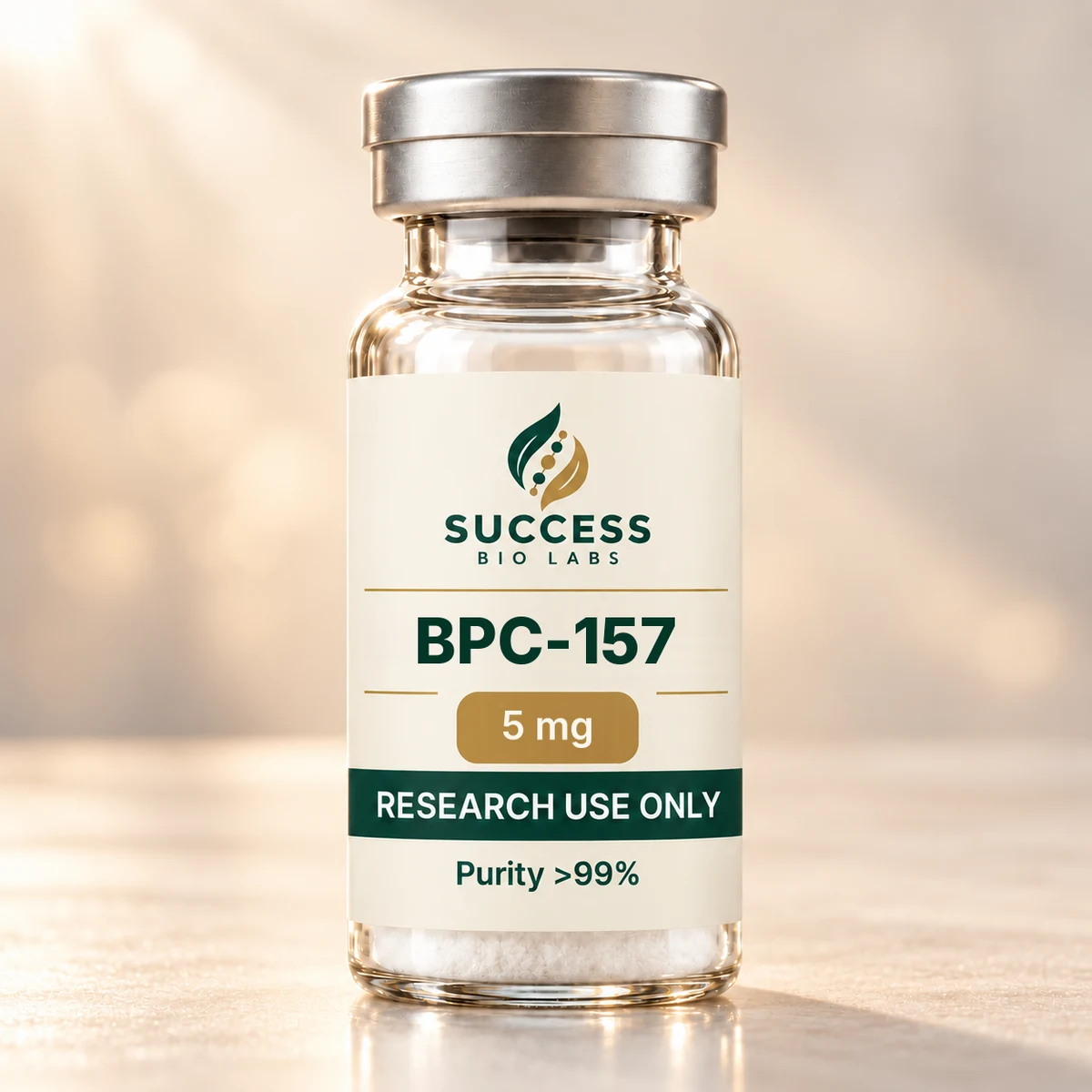
BPC-157 Vial
BPC-157, plainly specified. A synthetic 15-amino-acid peptide in 5, 10 and 15 mg lyophilized vials, with analytical documentation listed when available.
Certificate of analysis View available reports and lot details
Product identification & intended use
SKU:
For laboratory research use only. Not for human or veterinary use.
Description
BPC-157 is a synthetic 15-amino-acid peptide, sequence GEPPPGKPADDAGLV. We supply it as a lyophilized powder in 5, 10 and 15 mg vials, available analytical documentation is listed in the COA library.
Chemical identity & storage
| Compound / component | CAS number | Molecular weight | Specification status |
|---|---|---|---|
| BPC-157 | 137525-51-0 | 1419.5 g/mol Formula: C62H98N16O22 |
Catalog reference specification |
Storage: Keep sealed lyophilized material cold and protected from light. For long-term storage, keep at -20°C or below. After reconstitution, store at 2–8°C and avoid repeated freeze–thaw cycles.
What BPC-157 is.
BPC stands for Body Protection Compound. The sequence comes from a larger protein first isolated from human gastric juice. BPC-157 is that 15-residue fragment, made synthetically. You may also see it called PL 14736 or bepecin.
At a glance.
| Sequence | GEPPPGKPADDAGLV |
|---|---|
| Length | 15 amino acids |
| Molecular formula | C62H98N16O22 |
| Molecular weight | ≈ 1419.5 g/mol |
| CAS number | 137525-51-0 |
| Also known as | Body Protection Compound-157, PL 14736, bepecin |
| Form | Lyophilized powder |
| Strengths | 5, 10 or 15 mg per vial |
| Catalog reference | SBL-9880 |
What the research covers.
Most published BPC-157 work is preclinical, in rodent and cell models. It has looked at tendon and ligament repair, the gastrointestinal lining, angiogenesis and interactions with the nitric-oxide system. Human clinical data is very limited, so findings are best read as early-stage.
Three formats.
BPC-157 is also available as BPC-157 capsules for oral-model designs and as a ready-to-use BPC-157 liquid spray. For combined designs, see the BPC-157 + TB-500 blend, or the GLOW and KLOW blends.
Documentation.
Available analytical documentation is organized by compound, strength and format in the COA library. Do not treat a report as lot-specific unless a documented lot match is shown.
Handling.
Keep the lyophilized vial cold, dry and out of direct light until reconstitution. Bacteriostatic water is the usual diluent.
Questions.
What does BPC stand for?
Body Protection Compound. The “157” refers to this specific 15-residue sequence.
Which vial strength should I choose?
All three vials hold the same material in different amounts. Choose the one that fits the length of your study.
Is BPC-157 FDA approved?
No. BPC-157 is not approved for any use, and this product is sold for laboratory research only.
Further reading.
BPC-157 reconstitution calculator
BPC-157 formats compared: vials, capsules and spray
How to reconstitute peptides
For laboratory research use only. Not for human or veterinary use.
